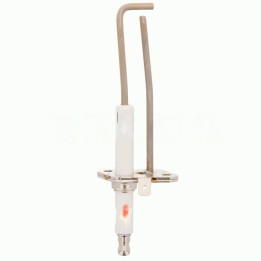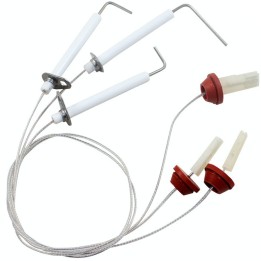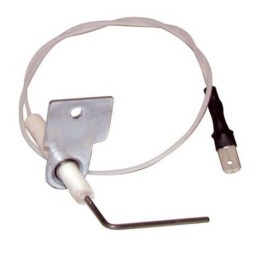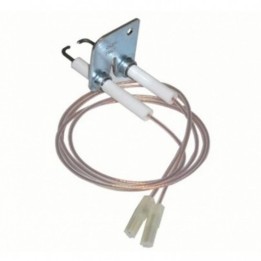







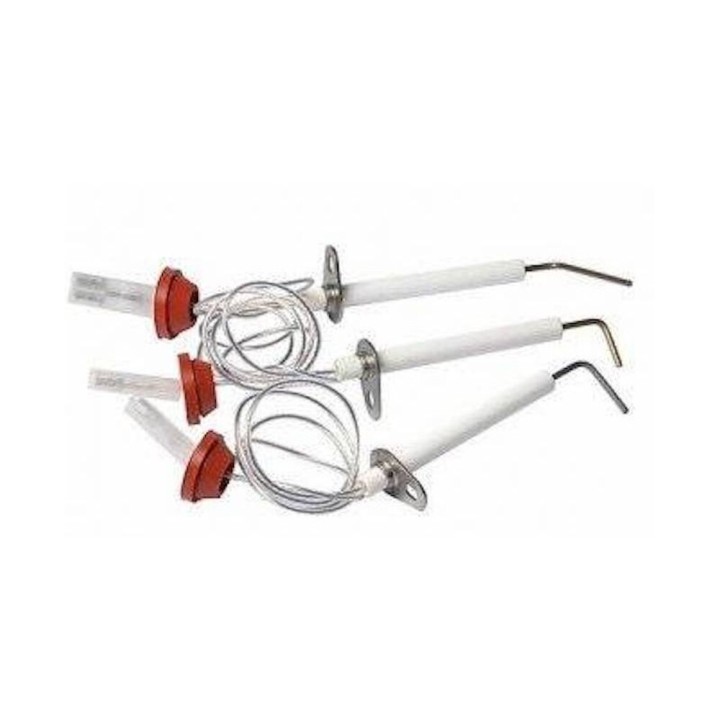
Spark Plug Ignition Electrodes Ref 122155600 Baxi Roca images
Spark Plug Ignition Electrodes Ref 122155600 Baxi Roca
RE309930003 ✅ Troubleshooting a hot water boiler - Repairing a gas boiler Gas boiler ?A boiler is an appliance used to heat water with a hydronic heating system.
✅ The hot water is distributed around the house in pipes and radiates heat into the rooms either through steel radiators (in newer homes), cast-iron radiators (older homes) or floor convection heaters (newer homes).
✅ Once the radiator or convection heater is heated by the hot water, the water returns to the boiler to be heated again and the water circulation circuit continues.
✅ In addition to radiators, the boiler is also used with radiant underfloor heating systems.
✅ These boilers can use either natural gas or propane (gas-fired) as fuel, or they can burn fuel oil (oil-fired).
✅ Fuel oil boilers need more maintenance than their gas counterparts and require regular attention to the blower and the oil filter.
✅ Boiler components ?The boiler is more complex than a forced-air heating system in that it has more parts, valves and controls.
✅ However, gas boilers are quite reliable and most problems, when they occur, are normally related to the expansion tank or the water circulator pumps.
✅ Let's take a look at the main boiler components for a forced-water (hydronic) system: Hot water supply side: Aquastat.
✅ The thermostat that regulates the boiler temperature Gas valve and burners - Combustion assembly that heats the water chamber Combined pressure/temperature gauge (tridicator) - Monitors water temperature and pressure Water supply valve - Controls the flow of water to the boiler Pressure reducing valve - Automatically maintains the correct water pressure at around 12-15 psi Air vent - Automatically removes unwanted air from the hydronic system Expansion tank - Critical component that allows the water to expand as it heats up.
✅ There are two types of expansion tanks: the horizontal steel expansion tank, an older and larger style, and the newer, smaller diaphragm-style expansion tank.
✅ Flow control valve - Regulates the flow of hot water to the system Pressure relief valve - Relieves high water pressure Hot water return side: Circulator - Electric pump that circulates the water through the system Drain valve - Valve that opens to allow the boiler to be drained.
✅ PROBLEM: The boiler does not produce heat PROBLEM: The boiler does not produce heat Possible causes - The boiler has no power - The water level is low - Failure of the pilot or the electric burner ignition - Thermostat failure Possible repairs - A circuit breaker or fuse controlling the boiler has tripped or blown.
✅ Reset the tripped circuit breaker.
✅ Replace the blown fuse. - Keep the water level at half full.
✅ The boiler's automatic fill system, using the pressure relief valve, should maintain the correct water level by keeping pressure levels at 12 to 15 psi.
✅ If you do not have a pressure reducing valve, you can also fill the boiler manually by opening the water supply valve until the boiler pressure reaches 12 psi. - The natural gas or propane control valve to the burner is closed. - The pilot light is out.
✅ Relight the pilot. - Look for possible problems in the electronic ignition system if the boiler has no pilot. - Check that the thermostat is in heating mode and that the temperature is set correctly. - Try adjusting the thermostat by raising or lowering the temperature a few degrees. - Thermostat troubleshooting. 04 of 08 PROBLEM: insufficient heating Possible causes - Sudden change: improper water levels - Gradual change: Mineral deposits in the boiler and in the heat exchanger Possible repairs - Check the reading on the Tridicator (combined pressure / temperature gauge).
✅ If the water pressure is low (below 12 psi) the system needs water to be added.
✅ The boiler's automatic fill system, which uses the pressure relief valve, should maintain an adequate water level by keeping a pressure of 12-15 psi.
✅ If you do not have a pressure relief valve, you can also fill the boiler manually by opening the water supply valve until the boiler reaches 12 psi. - If the problem developed gradually, the causes could be deposits in the system.
✅ Drain the boiler or call a technician for this task. - The expansion tank may have too much or too little water.
✅ It must be properly charged with air to prevent boiling.
✅ See the following section for a more detailed overview of the expansion tank. 05 of 08 PROBLEM: The expansion tank has excess water and inadequate air PROBLEM: The expansion tank has too much water or inadequate air There are two basic types of boiler expansion tank.
✅ There is an older type that is large, horizontal and made of steel, and there is a newer type of tank in diaphragm style (shown in the photo above).
✅ In older boiler systems, the steel expansion tank could be found in the attic or suspended between joists in the basement. in newer systems, the diaphragm expansion tank may be attached to the boiler piping near the boiler.
✅ The expansion tank must be correctly charged with air to prevent the water in the system from boiling and exceeding the desired 12 psi pressure.
✅ For tips on how to drain these two types of tank, please see the guide How to recharge a boiler expansion tank. 06 of 08 PROBLEM: Water leak around the boiler PROBLEM: Water leak around the boiler Possible causes Circulator (pump) failure Pressure relief valve failure Leak in a water pipe connection Possible repairs Most circulator repairs will require a technician If the circulator is leaking, replace the pump seal.
✅ If the pressure relief valve is leaking, the system's expansion tank may be full of water.
✅ See the previous section PROBLEM: The expansion tank has excess water and inadequate air.
✅ If the pressure relief valve is leaking and the problem is not the expansion tank, the valve may have sediment that prevents it from closing.
✅ To check this, turn off the boiler and let it cool down.
✅ Lift the manual pressure relief lever and discharge some water for 3 seconds, letting the lever return to the closed position.
✅ The water should come out forcefully and relatively clean.
✅ If the valve drips a little water afterwards, this could be caused by sediment trapped in the seat causing a small leak.
✅ Open the valve again and discharge a second time.
✅ If the pressure relief valve does not close, close the water supply valve to the boiler and remove and replace the relief valve.
✅ If no water comes out of the pressure relief valve, the valve is clogged and needs to be replaced, or there is no water in the boiler.
✅ If water is coming out of or dripping from a pipe, follow the leak to its source and repair the connection where the water is originating.
✅ This will require shutting off the water supply to the house and draining the boiler system.
✅ PROBLEM: Not all radiators heat up PROBLEM: Not all radiators heat up Possible causes Air trapped in the line Air trapped in the radiator (the top is cooler than the bottom) Zone valve or circulator failure Possible repairs Bleed air from the cold radiator by opening the radiator bleed valve at the top of the radiator.
✅ When water comes out of the radiator, close the valve.
✅ Check that the circulator is working correctly (that the motor is running).
✅ There may be dedicated circulators for different zones of the home.
✅ Check that the zone valve is working correctly.
✅ The water pipe should be hot up to and beyond the zone valve.
✅ If the valve is faulty or stuck, it will be hot up to the valve and then the temperature will drop slightly beyond the valve.
✅ PROBLEM: Noisy pipes Possible causes Circulator failure Water trapped in the return lines Possible repairs Check the circulator.
✅ There is a spring coupling that connects the pump to the motor.
✅ When it breaks after the pump seizes, the coupling will make a loud noise while the motor runs.
✅ Check that the slope of the return pipes runs downhill towards the boiler.
✅ Adjust the slope with new pipe hangers if necessary.
✅ Adjust the radiator slope with a bracket so that it tilts towards the return pipe.
-
Brand

-
ReferenceRE309930003
RE309930003